
Description
Identification & Characteristics
- Scientific Name:
Agave potatorum
, commonly known as the
Butterfly Agaveor
Verschaffelt Agave.
- Specific Label Details:
- Inermis: This term typically refers to a plant being “unarmed” or spineless. While most
Agave potatorum
have sharp, dark brown spines, “inermis” varieties are bred to have fewer or no spines for safer handling.
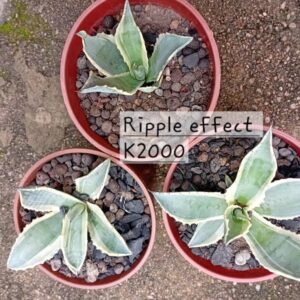
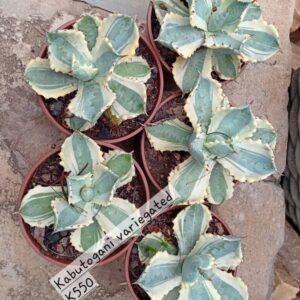
- Marginata: This indicates a variegated form where the leaf margins (edges) are a different color, such as creamy white or yellow, contrasting with the blue-grey center.
- Inermis: This term typically refers to a plant being “unarmed” or spineless. While most
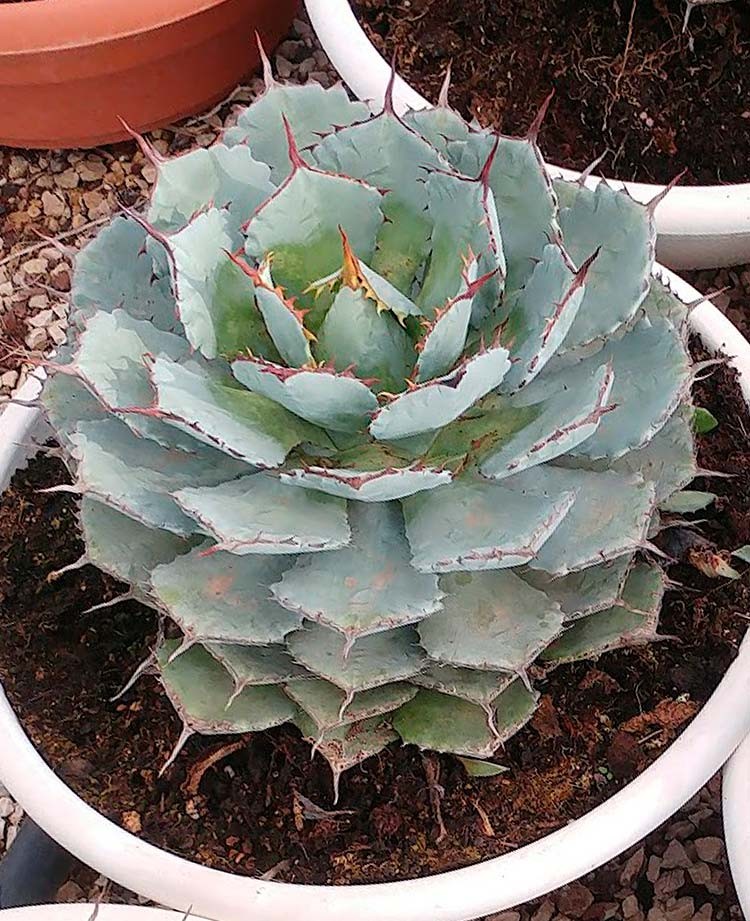
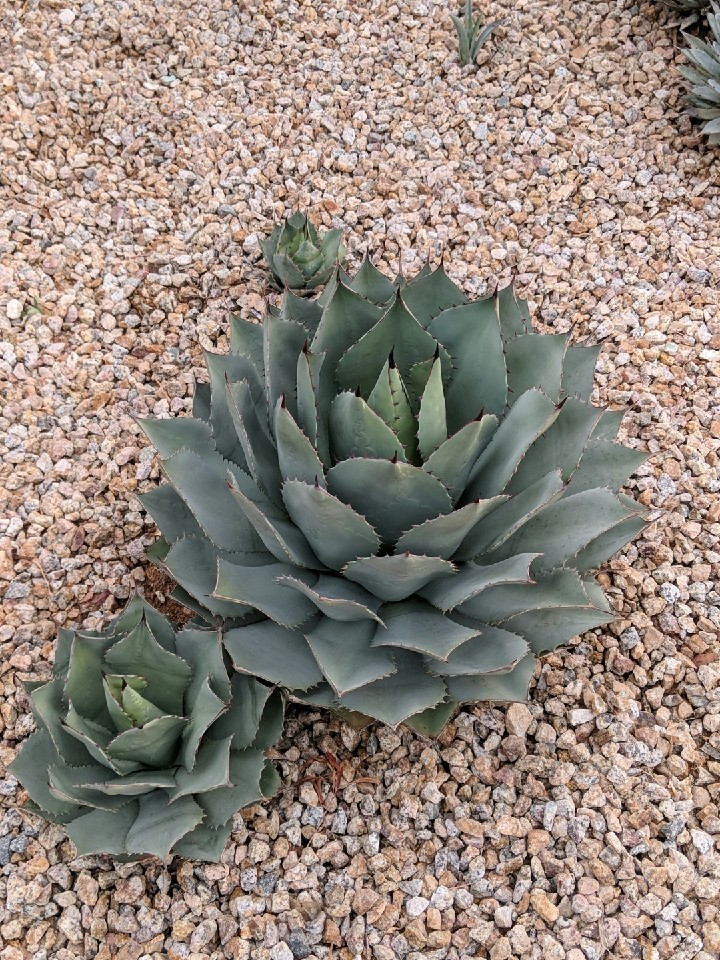
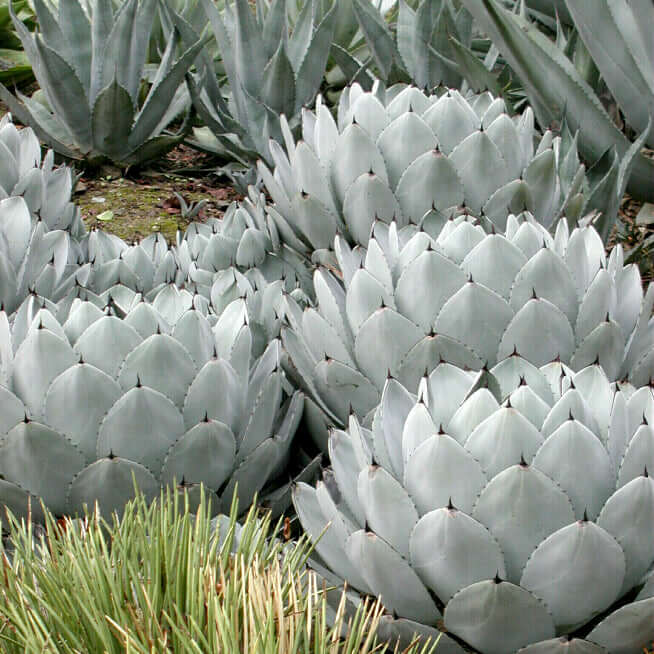
- Appearance: It forms a compact, symmetrical rosette of fleshy, blue-grey to silvery-white leaves. The leaves often show distinct “bud imprints” on their surfaces from where they were pressed against each other during development.
Care and Growth
- Light: Prefers full sun to partial shade. In extremely hot inland climates, some afternoon shade can prevent leaf scorching.
- Water: Needs well-drained soil. Water thoroughly only when the soil is completely dry, and reduce watering significantly during the dormant winter months.
- Size: Generally a small agave, reaching about 1 to 2 feet in height and width, making it ideal for container gardening.
- Lifespan: It is monocarpic, meaning the individual rosette will flower once after 10–25 years and then die. However, it may produce “pups” (offsets) around its base before it dies to continue the plant’s life cycle.
Safety Note
Be cautious when handling agaves; their sap can be a skin irritant, sometimes causing a rash or blistering (contact dermatitis).
Reviews
There are no reviews yet.